What Is a Good Net Worth by Age? (2026 US Benchmarks)
Net worth is the single best measure of financial health — and knowing how you compare to Americans your age helps you set realistic goals. Here's what the Federal Reserve data actually says, and what "good" really means at every age.
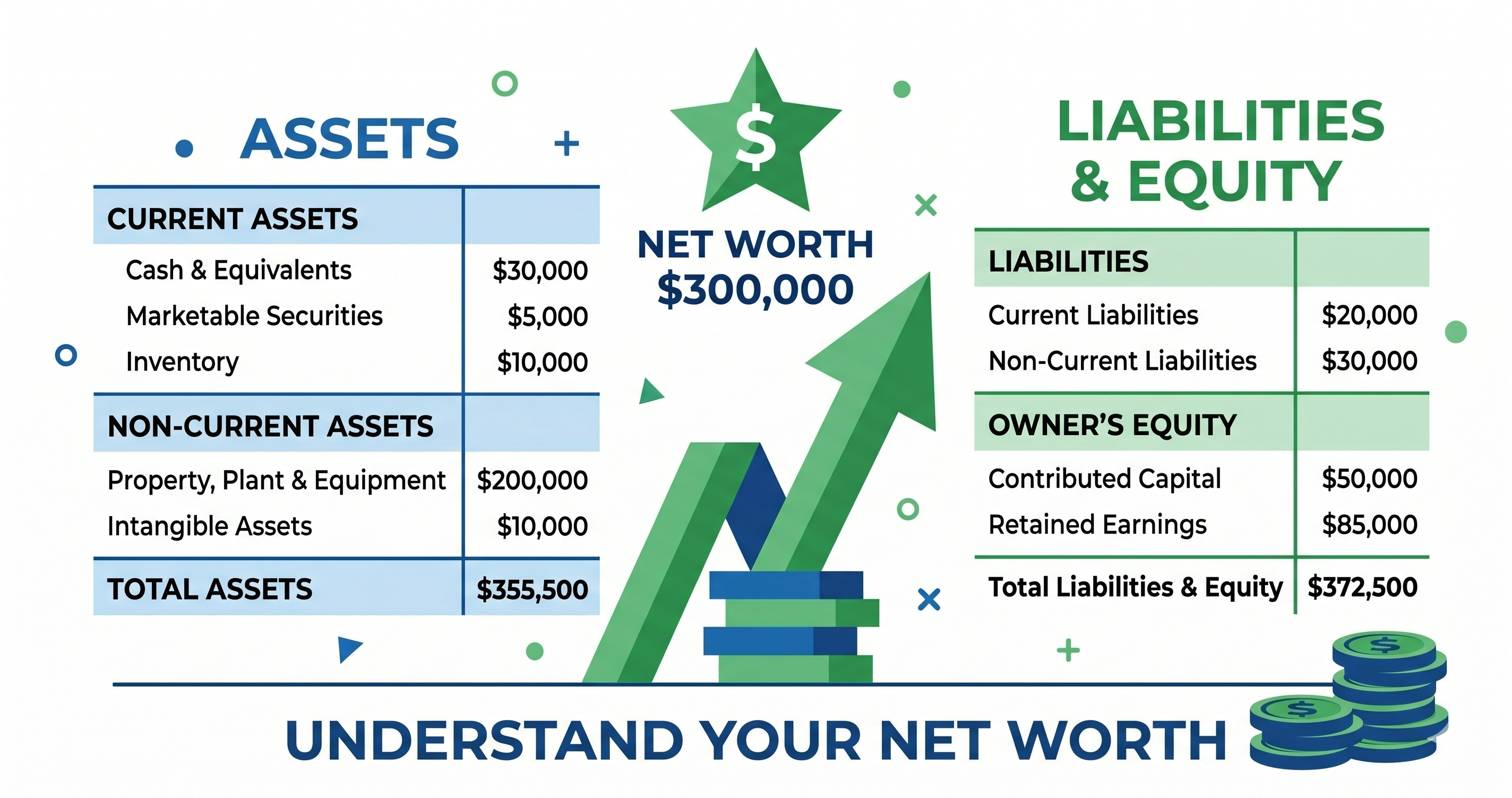
Enter your assets and liabilities — see your net worth and how you compare to US averages by age.
Free Net Worth Calculator →US Net Worth by Age: Federal Reserve Data (2022)
The most authoritative source on American net worth is the Federal Reserve's Survey of Consumer Finances, conducted every 3 years. The most recent data is from 2022:
| Age Group | Average Net Worth | Median Net Worth |
|---|---|---|
| Under 35 | $183,500 | $39,000 |
| 35–44 | $549,600 | $135,600 |
| 45–54 | $975,800 | $247,200 |
| 55–64 | $1,566,900 | $374,500 |
| 65–74 | $1,794,600 | $409,900 |
| 75+ | $1,624,100 | $335,600 |
Source: Federal Reserve Survey of Consumer Finances, 2022 (most recent available).
Key insight: Average net worth is dramatically higher than median at every age — because a small number of ultra-wealthy Americans pull the average up. The median is the better benchmark for most people.
What Is a Good Net Worth at Each Age?
Good Net Worth at 30
A commonly used benchmark: net worth equal to your annual salary by age 30. If you earn $60,000, $60,000 net worth at 30 is on track. The median for under-35s is $39,000. If you have positive net worth at 30 — even $10,000–$20,000 — you're ahead of many peers who are still in negative territory due to student loan debt.
Good Net Worth at 40
Financial planners commonly suggest 3× annual salary by 40. Earning $75,000? Target $225,000. The median for ages 35–44 is $135,600. At 40, having your mortgage equity growing and 1–2× salary in retirement accounts puts you solidly on track.
Good Net Worth at 50
By 50, target 5–7× annual salary. Earning $80,000? Aim for $400,000–$560,000. The median for ages 45–54 is $247,200. Your 50s are the critical decade — kids may be done with college, the mortgage is lower, and catch-up retirement contributions ($8,000/year in IRA, higher in 401k) can dramatically accelerate growth.
Good Net Worth at 60
By 60, target 8–10× annual salary. Earning $80,000? Aim for $640,000–$800,000+ in total net worth (or at least retirement assets). The median for ages 55–64 is $374,500. Social Security and Medicare timing decisions become important at this stage.
How to Improve Your Net Worth Fast
- Maximize retirement contributions — 401(k) up to employer match first, then Roth IRA ($7,000/year). This is the single highest-leverage action for most earners.
- Pay off high-interest debt — credit card debt at 20%+ APR is the fastest way to destroy net worth. Paying it off is a guaranteed 20% return.
- Build home equity — make extra mortgage payments to accelerate equity build-up, which directly increases net worth.
- Invest in index funds — S&P 500 index funds historically return ~10%/year before inflation. $500/month invested at 7% for 20 years = $260,000.
- Avoid depreciating "status" purchases — new cars lose 20% of value in year 1. Financing a new car adds a liability and reduces an asset simultaneously.